


U.S. to Allow Entry With This One Surprising Document: it’s a phrase that’s gone viral across social media and news feeds. Sounds unbelievable, right? The idea that you could just show up in the United States without traditional documents and still be let in?
Let’s clear the air: this is a half-truth mixed with confusion and clickbait. In reality, you cannot enter the United States without a valid passport and legal authorization — such as a visa or ESTA — unless you fall under very specific, narrow exceptions. This guide dives deep into what’s really true, what’s legal, and what the official U.S. government policy actually says. Whether you’re a frequent flyer, a family traveler, an immigration lawyer, or just someone looking for clarity, this piece lays it all out — plain and simple.
Table of Contents
U.S. to Allow Entry With This One Surprising Document
Let’s recap: despite misleading headlines, the United States has NOT introduced any new policy allowing people to enter the country without a passport or visa. All travelers must comply with well-established U.S. entry rules — unless they’re part of very specific, narrow exceptions. Some documents — like Green Cards, refugee travel documents, or passport cards — can substitute for passports in very particular cases. But for 99% of travelers, you still need a valid passport and visa or ESTA authorization. If something sounds too good to be true — like entering the U.S. with a random document — it probably is.
| Topic | What It Means |
|---|---|
| Entering the U.S. without a passport | Not allowed for general public. Rare legal exceptions exist. |
| Passport alternatives | Green Cards, passport cards, trusted traveler IDs (for limited use). |
| Visa Waiver Program (ESTA) | Allows travel without visa — but still requires passport. |
| Refugee travel documents | Used by asylees and certain immigrants. Not available to tourists. |
| Biometric entry updates | Facial recognition and exit-tracking underway in 2025. |
| Official reference | Always check: www.cbp.gov |
Understanding U.S. Border Rules: The Basics
Let’s get this straight. The United States has some of the most structured entry protocols in the world. Every traveler — regardless of nationality — must follow strict requirements when entering the country:
- Have a valid passport
- Have proper authorization to enter (visa, ESTA, or special permit)
- Submit to inspection by a U.S. Customs and Border Protection (CBP) officer
The recent buzz about the U.S. allowing entry without passports or visas comes from misunderstandings about legal travel exceptions, especially among:
- U.S. lawful permanent residents (Green Card holders)
- Cruise passengers on “closed-loop” routes
- Citizens of countries in the Visa Waiver Program
- Trusted Traveler Program members
- Travelers with refugee or parolee status
These travelers may not require traditional visas, but they still need legal documents that act as official substitutes. Let’s walk through each scenario.
Breaking Down the U.S. to Allow Entry With This One Surprising Document
1. U.S. Passport Card
U.S. citizens can apply for a passport card that allows re-entry to the U.S. via land or sea from Canada, Mexico, Bermuda, or the Caribbean. This is ideal for regional travelers and cruise-goers.
However:
- It cannot be used for international air travel.
- It’s only available to U.S. citizens.
2. Green Cards
Lawful Permanent Residents (LPRs) — also known as Green Card holders — can re-enter the U.S. using their Green Card alone, without needing a visa. While airlines may require a passport for boarding, CBP allows re-entry with just a Green Card.
That said, this only applies to:
- U.S. lawful permanent residents
- Returning residents who haven’t been out of the country longer than 1 year
3. Enhanced Driver’s Licenses (EDLs)
States like Michigan, Vermont, New York, Minnesota, and Washington issue EDLs — real IDs enhanced with RFID chips — that allow U.S. citizens to re-enter the U.S. by land or sea from Canada, Mexico, and the Caribbean.
They are:
- Not valid for air travel
- Only available to U.S. citizens
- Only valid at specific borders
4. Trusted Traveler Program Cards
Cards like:
- NEXUS
- SENTRI
- FAST
- Global Entry
…are issued to pre-approved, low-risk travelers. These allow for faster re-entry — but they do not replace passports for air travel and are not valid for all travelers
5. Advance Parole & Refugee Travel Documents
For immigrants waiting on permanent status or individuals with asylum/refugee protections, Advance Parole or Refugee Travel Documents allow re-entry without a visa. These are legal substitutes for a visa — but:
- Must be approved before travel
- Only valid for specific groups
- Can’t be used for tourism
Case Studies: Real-World Examples
Case 1: Maria from Spain
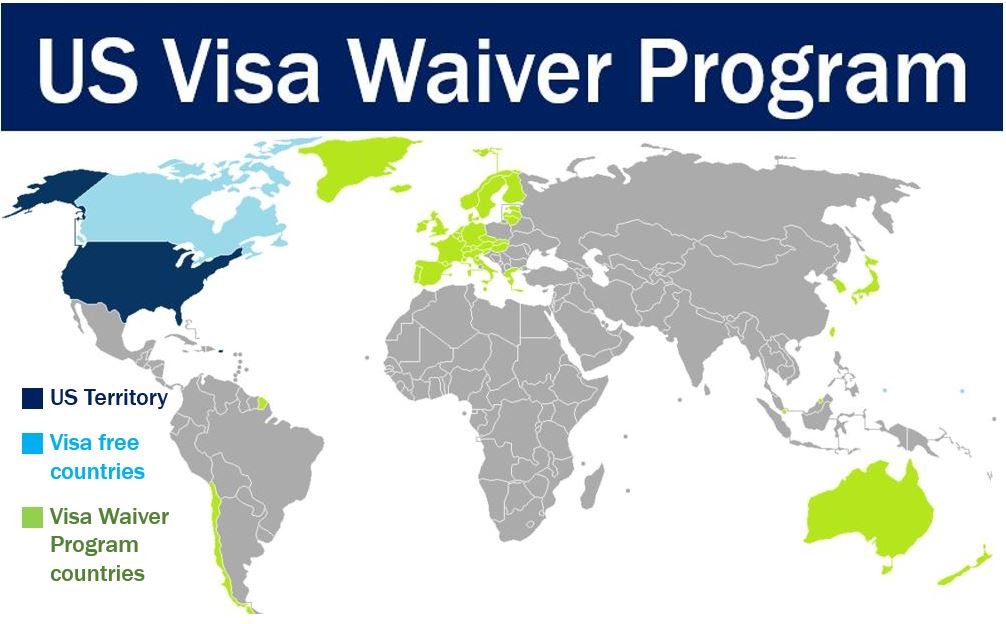
Maria is a Spanish citizen planning a two-week vacation in Florida. Spain is part of the Visa Waiver Program, so she doesn’t need a traditional visa — but she must:
- Apply for an ESTA
- Travel with her valid electronic passport
- Keep her trip under 90 days
She cannot enter the U.S. with just her national ID card or driver’s license.
Case 2: Rafi from Pakistan
Rafi is a Pakistani citizen attending a conference in California. Since Pakistan is not in the Visa Waiver Program, Rafi must:
- Schedule an interview at a U.S. embassy
- Obtain a B1/B2 visa
- Travel with a valid passport + visa
No other document will grant him entry.
Case 3: Lucy from New York
Lucy is a U.S. citizen sailing on a closed-loop cruise from Miami to the Bahamas and back. U.S. law allows her to:
- Use a passport card or state-issued birth certificate + photo ID
- Skip carrying her full passport (although it’s recommended)
The Legal History Behind U.S. Entry Requirements
Back in the early 20th century, U.S. travelers could cross many borders with little more than a driver’s license. After 9/11, the U.S. introduced the Western Hemisphere Travel Initiative (WHTI), requiring passports or equivalent documents for all land, sea, and air entries into the U.S.
The Department of Homeland Security and CBP have since expanded requirements to include:
- Biometric screening
- Entry/Exit tracking
- Mandatory passport scans for flights
What’s Coming Next: U.S. to Allow Entry With This One Surprising Document
In 2025, the U.S. is rolling out biometric exit tracking at major airports and land borders. Travelers leaving the U.S. will be scanned using facial recognition and matched against entry records. This helps:
- Prevent overstays
- Detect fraud
- Replace manual checks with fast, automated systems
But again — this does not remove the need for passports or legal documentation. It simply enhances how identity is verified.
Entry Without Passport: What Are The ONLY Exceptions?
Let’s be super clear: The following are the ONLY categories of people who may enter the U.S. without a traditional passport:
| Group | Accepted Document | Conditions |
|---|---|---|
| U.S. citizens on closed-loop cruises | Birth certificate + photo ID | Land/sea travel only |
| Green Card holders | Green Card (I-551) | Re-entry within 1 year |
| Asylees / Refugees | Refugee Travel Document | Must be applied for in advance |
| Advance Parole holders | Form I-512L | Only for pending immigration cases |
| Children under 16 entering from Canada/Mexico | Birth certificate | Land/sea only, must be accompanied |
U.S. Coin Values in 2025: Hidden Treasure in Your Pocket With These 3 Rare Finds
These Jefferson Nickels Are Worth a Fortune — Rare Graded Finds Still Turning Up in Pocket Change
Practical Travel Checklist
Before heading to the airport, run through this basic list:
- Check your passport’s expiration date (must be valid 6 months beyond stay)
- Verify your visa or ESTA status
- Print your documents or keep secure digital copies
- Understand if your route includes land/sea entry only
- Research CBP rules for your country and travel type