
REAL ID Reliability Questioned by DHS: In a twist that’s causing some serious airport anxiety, the Department of Homeland Security (DHS) — the very agency responsible for the REAL ID Act — has questioned whether REAL IDs are reliable proof of legal status and identity in certain federal enforcement scenarios. That’s a pretty big deal, considering that as of May 7, 2025, Americans are required to present a REAL ID-compliant license or ID to board domestic flights or access federal buildings. Now, people are left asking: “Is my REAL ID actually valid for federal use?” The answer, as with most things tied to government regulations, isn’t as simple as yes or no. This article unpacks what’s happening, how it could impact you, and what steps you can take to ensure you’re not left scrambling at airport security or locked out of a federal building.
Table of Contents
REAL ID Reliability Questioned by DHS
The REAL ID Act was supposed to be a game-changer — a way to unify and secure America’s identity verification system. But almost two decades in, cracks are showing. Between technical errors, bureaucratic confusion, and DHS’s own reservations, it’s clear that REAL ID isn’t the airtight solution we once hoped for. The best course of action? Double-check your documents, keep a passport or backup ID handy, and don’t assume your star-marked card is enough in every situation. Preparation beats panic — especially when you’re running late for a flight or trying to access a secure federal building.
| Topic | Details |
|---|---|
| REAL ID Requirement | Mandatory for flights and federal building access since May 7, 2025 |
| DHS Concern | REAL ID may not reliably confirm U.S. citizenship in enforcement contexts |
| California Impact | Over 325,000 REAL IDs issued with documentation errors |
| Validity Criteria | REAL ID-compliant if it has a and was issued by a DHS-certified state |
| Alternative IDs | U.S. passport, military ID, enhanced driver’s license, green card |
| Official Resource | www.dhs.gov/real-id |
What is the REAL ID and Why Was It Created?
The REAL ID Act, passed by Congress in 2005, aimed to set higher security standards for state-issued IDs. The law was part of the federal government’s response to the 9/11 attacks and was intended to close loopholes that allowed terrorists to obtain fake identification.
In theory, REAL IDs were meant to create a uniform, secure identification system across all 50 states. This would allow authorities to better verify someone’s identity and reduce fraud. But in reality, every state implemented the law differently — leading to confusion and inconsistency.
A REAL ID looks like your typical driver’s license but features a star in the upper right-hand corner, indicating it meets federal standards. It’s designed for:
- Boarding domestic flights
- Entering secure federal facilities
- Visiting nuclear plants or military bases
However, DHS has recently admitted that these cards might not actually prove someone’s citizenship or immigration status — especially during federal law enforcement or immigration stops.
DHS Statement Raises Eyebrows: What They Really Said
The controversy surfaced in a legal case involving an Alabama man who was stopped and questioned despite presenting his REAL ID. DHS filed a court brief saying:
“A REAL ID-compliant driver’s license or identification card, though federally certified, does not necessarily establish that the bearer is a U.S. citizen or lawfully present in the country.”
That’s a huge deal because many Americans — especially legal residents and immigrants — rely on their REAL ID as their primary form of identification.
This acknowledgment opens a legal and practical gray area. It means that TSA agents may accept your REAL ID, but Customs and Border Protection (CBP) or other enforcement officers might not — particularly at border zones, checkpoints, or during legal proceedings.
Timeline of REAL ID Rollout and Delays
The journey to enforcing REAL ID has been anything but smooth:
- 2005: Congress passes the REAL ID Act.
- 2008–2014: States resist implementation, citing privacy and cost concerns.
- 2016: DHS begins accepting compliant IDs at federal facilities.
- 2020–2023: Enforcement delayed multiple times due to the COVID-19 pandemic.
- May 7, 2025: Final deadline for nationwide enforcement.
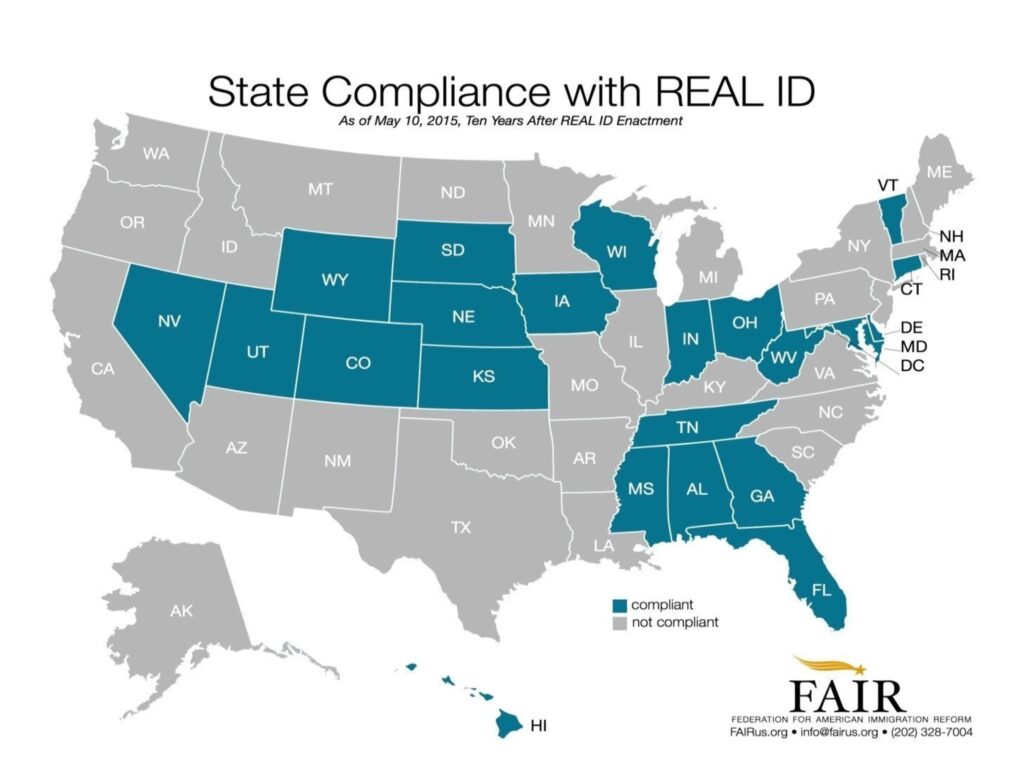
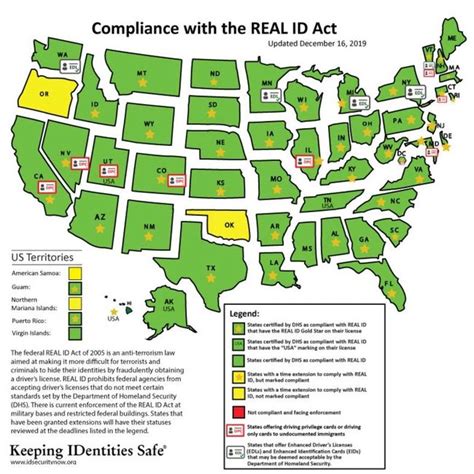
Despite nearly 20 years of preparation, inconsistencies remain in how REAL IDs are issued and recognized across the country.
Real-Life Examples: When REAL IDs Fail
The California DMV Glitch
More than 325,000 Californians were notified that their REAL ID cards may not be valid due to an error in how their proof of residency documents were stored. The state’s DMV admitted to the mistake, caused by a software glitch that failed to retain scanned documents.
Affected residents were instructed to return to the DMV with new documentation — a process that created frustration and long wait times.
The Alabama Detention
In the court case that triggered DHS’s statement, an Alabama resident was reportedly detained and questioned despite having a REAL ID. DHS claimed the card wasn’t enough to prove legal status, which sparked debate over the ID’s intended purpose and reliability.
How to Tell If Your REAL ID is Valid?
Just because you have a REAL ID card doesn’t mean it’s automatically accepted in every situation. Here’s how to verify its validity:
Step 1: Check for the Star
Look for a gold or black star in the top right corner. If it says “Not for Federal Identification,” it’s not a REAL ID.
Step 2: Confirm Your State’s Status
Go to www.dhs.gov/real-id and click on your state. It will tell you whether the state is fully compliant and how their IDs are issued.
Step 3: Review What You Submitted
When you got your REAL ID, you should’ve provided:
- Proof of identity (birth certificate, passport)
- Social Security card or verification
- Two documents showing your current address
If you didn’t submit these or submitted expired/invalid documents, your REAL ID might not be valid — even if it looks legit.
Step 4: Contact the DMV
Call or visit your local DMV. Ask, “Was my REAL ID issued under full DHS compliance?” If not, request a reissue with proper documentation.
What If My REAL ID Reliability Questioned by DHS?
Don’t panic — there are workarounds. You can still use other federally accepted documents to board a plane or enter a government building, including:
- U.S. Passport or Passport Card
- Enhanced Driver’s License (EDL) — available in some states like Michigan, New York, and Washington
- Permanent Resident Card (Green Card)
- DHS Trusted Traveler Cards (Global Entry, NEXUS, SENTRI)
- U.S. Military ID (active or retired)
For professionals or government employees, these alternatives are not just convenient — they’re often more reliable than a REAL ID.
Renewing or Reapplying for REAL ID
If your card is invalid or compromised, here’s how to fix it:
- Schedule a DMV appointment. Walk-ins aren’t always allowed.
- Bring your original documents. No photocopies.
- Be ready to pay a renewal or reissue fee. In most states, this ranges from $30–$50.
- Request a receipt. This shows your ID is being reprocessed and can serve as a temporary solution.
Note: Processing times vary, but expect 2–6 weeks to receive your new card by mail.
What Professionals, Employers, and Organizations Need to Know?
If you’re an employer in security, government, defense, education, or healthcare, the REAL ID issue affects your operations. Here’s how:
- HR departments should verify IDs used for I-9 purposes meet the DHS standard or request backup documentation.
- Security teams in federal or high-security buildings should be aware that some REAL IDs may be non-compliant.
- Contractor firms working with the federal government must educate their employees about acceptable forms of ID under GSA or DoD contracts.
Employees or clients turned away due to a non-compliant REAL ID could cause disruptions or even legal issues.
REAL ID Reliability Questioned by DHS: Social Equity and Access Issues
It’s also worth pointing out that REAL ID rollout has created inequities across the country. Vulnerable groups face the biggest hurdles:
- Low-income Americans may lack original documents or funds to pay fees.
- Seniors may struggle with mobility or digitized record access.
- Undocumented immigrants and DACA recipients have unclear eligibility in many states.
- Rural residents may live hours away from DMV centers.
These are not just logistical concerns — they are real barriers to access.
U.S. Coin Values in 2025: Hidden Treasure in Your Pocket With These 3 Rare Finds