
Pennies Worth More Than 1 Cent: Pennies worth more than one cent may sound like something from a tall tale, but here’s the real scoop: there are thousands of pennies in circulation right now that are worth more than a cent — some by a little, others by a lot. We’re talking real value — from $5 to $10,000, and in some extreme cases, even over a million dollars. So before you toss that old coin into a tip jar, you might want to take a second look. For generations, people in America have underestimated pennies. They’re the underdog of pocket change — easy to ignore, easy to lose. But ask any seasoned coin collector, and they’ll tell you: the right penny can be a gold mine. And the best part? You don’t need to be a millionaire or a professional numismatist to find one. You just need a sharp eye, a little curiosity, and the right knowledge — which is exactly what you’ll get here.
Table of Contents
Pennies Worth More Than 1 Cent
Here’s the bottom line: not every penny is “just a penny.” Some are rare, historic, or downright strange in the best way — and that means they could be seriously valuable. Whether you’re a curious kid, a weekend treasure hunter, or someone who inherited an old coin collection, knowing what to look for can pay off — literally. Use this guide, stay sharp, and don’t rush to spend that next penny. You never know which one might be worth its weight in gold.
| Topic | Info / Data |
|---|---|
| Most valuable penny | 1943 Bronze Lincoln sold for over $2 million |
| Common valuable years | 1909-S VDB, 1914-D, 1955 Double Die, 1922 Plain |
| Ending penny production | U.S. Mint to stop penny production in 2025 |
| Professional grading services | PCGS and NGC offer coin authentication and valuation |
| Free resource to check penny values | USA Coin Book – comprehensive online coin database |
Why Are Some Pennies Worth More Than 1 Cent?
It’s simple: not all pennies are created equal.
A penny’s value can be affected by several factors:
- Rarity – Fewer minted, higher demand.
- Errors – Mistakes in the minting process can make a coin a collectible jackpot.
- Condition – A clean, untouched coin is always worth more than one that’s worn down.
- Historical significance – Coins with unique stories (like war-era issues) become prized over time.
- Metal content – Older pennies (pre-1982) are made mostly of copper, which can be worth more than a cent on its own.
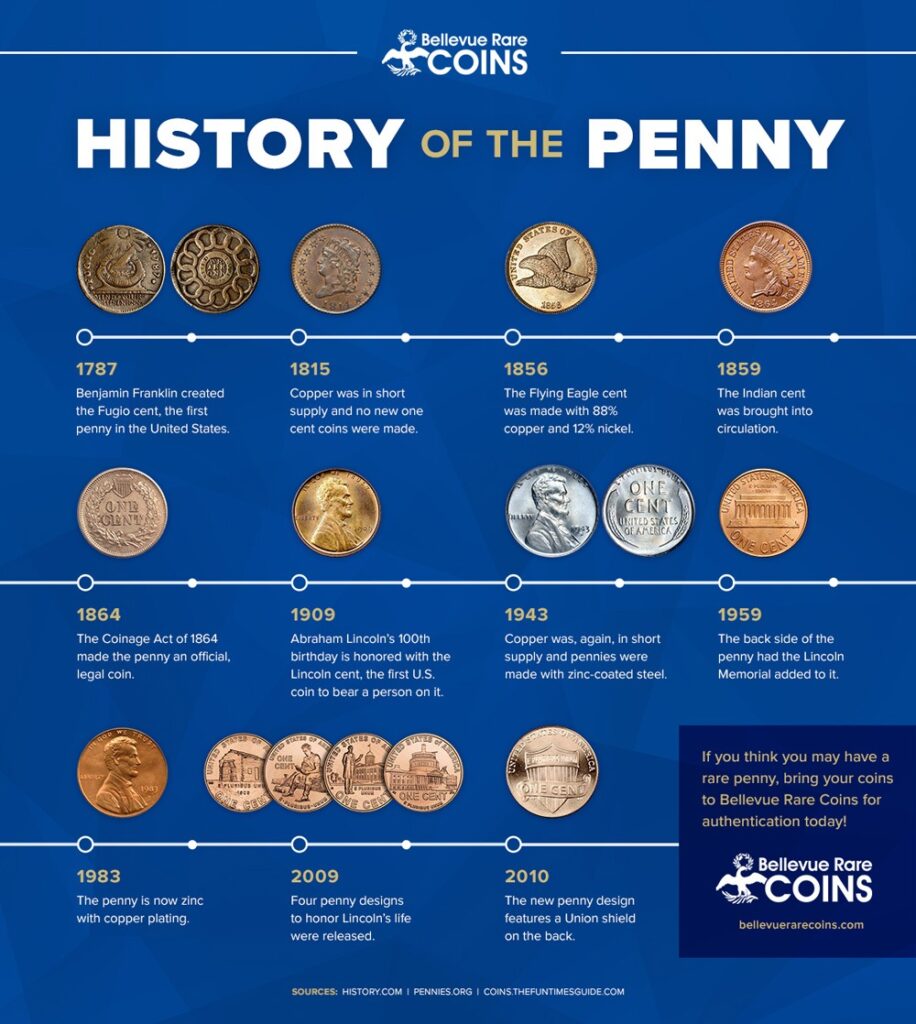
A Quick History of the U.S. Penny
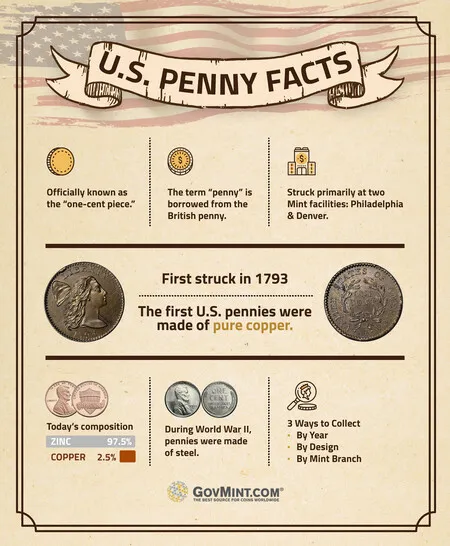
The U.S. penny has been around since 1793, making it one of the oldest American coins still in use. Over the centuries, it has changed size, metal content, and design.
Some notable penny designs include:
- Large Cents (1793–1857) – Bigger than modern pennies, pure copper.
- Indian Head Cents (1859–1909) – Introduced during westward expansion, these are now highly collectible.
- Lincoln Wheat Cents (1909–1958) – Introduced for Lincoln’s 100th birthday; many rare varieties exist.
- Lincoln Memorial (1959–2008) – Familiar design for anyone born after 1960.
- Shield Cents (2010–2025) – The current version; modern but still collectible if rare varieties are found.
In 2025, the U.S. Mint announced it would stop penny production due to high production costs — it costs nearly 2.1 cents to make a single penny. With production ending, many expect existing coins to grow more valuable over time.
The Top Valuable Pennies Worth More Than 1 Cent
While most people won’t find a million-dollar penny lying around, these examples show that real value exists — sometimes in pocket change.
1943 Bronze Lincoln Wheat Penny
- Mistakenly struck in copper instead of steel during WWII.
- Only a few dozen exist.
- Value: $100,000 to $2,000,000+.
1909-S VDB Lincoln Penny
- First year of the Lincoln design.
- VDB initials of designer (Victor David Brenner) appear on reverse.
- San Francisco minted fewer than 500,000.
- Value: $600 to $100,000, depending on condition.
1955 Double Die Penny
- Known for its clearly doubled lettering.
- Easily spotted by eye.
- Value: $1,000 to $15,000+.
1914-D Wheat Penny
- Rare due to limited mintage.
- Denver mint version in high demand.
- Value: $200 to $5,000+.
1922 Plain (No D) Penny
- Meant to have a “D” mint mark (Denver), but some were struck without it.
- Value: $500 to $3,000.
How to Check If Your Pennies Worth More Than 1 Cent?
1. Look at the Year
Anything before 1959 is worth a second look — especially Wheat Cents (1909–1958) or older. Even if not rare, collectors still buy them in bulk.
2. Check for the Mint Mark
This letter near the date tells you where the coin was made:
- “D” = Denver
- “S” = San Francisco
- No letter = Philadelphia
Mint mark combinations can make or break a coin’s value. For example, the 1909-S VDB is worth thousands, while the 1909 VDB (no S) might only be worth $10–20.
3. Inspect for Errors
Errors are where things get exciting. Look for:
- Double dies (extra lines on letters or numbers)
- Off-center strikes
- Missing details or letters
- Wrong metal coins (like a 1983 copper penny)
Tip: Use a 10x magnifier or coin loupe to check closely. The difference between a $1 penny and a $10,000 penny could be a small doubling on the “IN GOD WE TRUST” motto.
4. Grade Its Condition
Coin collectors use a grading scale from 1 to 70:
- 1 = poor
- 60–70 = uncirculated or mint state (MS)
A rare penny in poor condition might only be worth $20. The same coin in pristine condition could fetch $5,000. You can get your coin professionally graded by PCGS or NGC
The Tools You’ll Need
Want to do this right? Here’s a simple toolkit:
- Magnifying Glass or Loupe (10x recommended)
- Digital Scale (to detect incorrect metal weight)
- Red Book – A Guide Book of United States Coins (gold standard for collectors)
- Access to USA Coin Book or PCGS Price Guide for real-time values
- Protective coin holders or sleeves (to keep your finds safe)
You can get all of these for under $50 and be ready to start identifying and preserving valuable coins.
Common Penny Myths Debunked
Myth #1: All old pennies are valuable.
Nope — most pennies before 1982 are made of copper, which might give them slight metal value, but only rare dates and errors bring big bucks.
Myth #2: Shiny pennies are more valuable.
Not always. Shiny doesn’t equal valuable. In fact, cleaned coins often lose value. Collectors prefer natural tone and surface.
Myth #3: Modern pennies aren’t worth checking.
Wrong again. Even modern coins like the 1992 Close AM or 1999 Wide AM are worth $500–$2,000, if you find one with the error.
These 10 Coins Could Be Worth Much More by 2050 – Valuable Pennies to Keep!
These Jefferson Nickels Are Worth a Fortune — Rare Graded Finds Still Turning Up in Pocket Change
11-Year Rise of Rare Wheat Pennies: Which Coins Became Goldmines for Collectors?