
McRib Lawsuit Update: McDonald’s Responds to Claims Customers Were Misled is one of those headlines that makes you pause and ask: Wait, what’s really in a McRib? And that’s exactly what sparked a federal class-action lawsuit filed in December 2025. But this case is about more than what’s between two buns. It touches on marketing law, brand trust, consumer rights, and even how we, as Americans, interpret labels and food. Whether you’re a curious consumer, legal expert, or a brand manager watching this unfold, there’s a lot to unpack here. This article breaks it down in plain terms, with legal context, food history, consumer behavior data, and what’s next in this high-profile case.
Table of Contents
McRib Lawsuit Update
The McRib lawsuit update is more than a quirky fast-food drama — it’s a case that could redefine the rules of marketing in America. With millions of dollars, brand reputation, and consumer trust on the line, both sides are digging in. The plaintiffs argue they were misled by clever branding. McDonald’s insists it’s always played fair. Whatever the verdict, this case is a must-watch for anyone who works in branding, law, food, or simply cares about what’s in their sandwich.
| Topic | Summary |
|---|---|
| Lawsuit Filed | Class-action lawsuit filed Dec 23, 2025, in U.S. District Court (Northern District of Illinois) |
| Plaintiffs | 4 consumers from CA, NY, IL, and D.C. allege misleading marketing |
| Core Claim | McDonald’s misled buyers by implying McRib contains real pork rib meat |
| McDonald’s Response | Company denies claims; says sandwich is made with 100% U.S. pork |
| Key Issue | Marketing vs. expectation: does “McRib” suggest it contains rib meat? |
| Consumer Survey | 72% of people believe the McRib contains rib meat due to its name |
| Ingredients | Boneless restructured pork patty, shaped like ribs but not made from rib meat |
| Potential Outcomes | Dismissal, class certification, settlement, or marketing changes |
| Official Ingredient Info | mcdonalds.com/us/en-us |
Why This McRib Lawsuit Update Matters?
Let’s face it: fast food is deeply woven into American culture. The McRib isn’t just a seasonal item—it’s a pop culture event. McDonald’s knows that. It builds hype with ads, social media drops, and limited-time-only availability.
So when four plaintiffs from different states filed a lawsuit alleging the McRib’s name, price, and shape mislead buyers, it raised a big question: How far can brands go in naming products without being deceptive?
It’s not about food safety. It’s about truth in labeling and fair marketing — core values in both consumer law and brand management.
The Allegations: What Are Plaintiffs Claiming?
Here’s the gist:
- The name “McRib” suggests it contains pork rib meat, a higher-quality cut.
- The patty is shaped to resemble ribs, reinforcing that impression.
- The sandwich is priced higher than similar McDonald’s items, suggesting it’s premium.
- McDonald’s didn’t clearly disclose that the patty is made from restructured pork (like shoulder or other parts).
- Plaintiffs say this led them to overpay or buy something they wouldn’t have otherwise.
The legal term here is fraudulent misrepresentation, along with claims for breach of warranty and consumer protection violations.
They’re not just upset for themselves — they want class action status so the lawsuit can represent millions of other buyers who may have been similarly misled over the years.
McRib Lawsuit Update: McDonald’s Fires Back
McDonald’s didn’t waste time clapping back. In an official statement, the fast-food giant said:
- The McRib is made with 100% real pork, sourced from U.S. farms.
- It contains no organs, stomach, or non-standard meat cuts.
- The claims are “inaccurate and misleading,” and the lawsuit “distorts the facts.”
- Ingredient lists are published clearly online and accessible to anyone.
McDonald’s is leaning on its transparency record and saying this case is more about semantics than substance. It maintains that no reasonable person would think the McRib is made of literal ribs, especially since the sandwich is boneless.
What’s Actually in a McRib?
Let’s clear this up once and for all.
According to McDonald’s own product description:
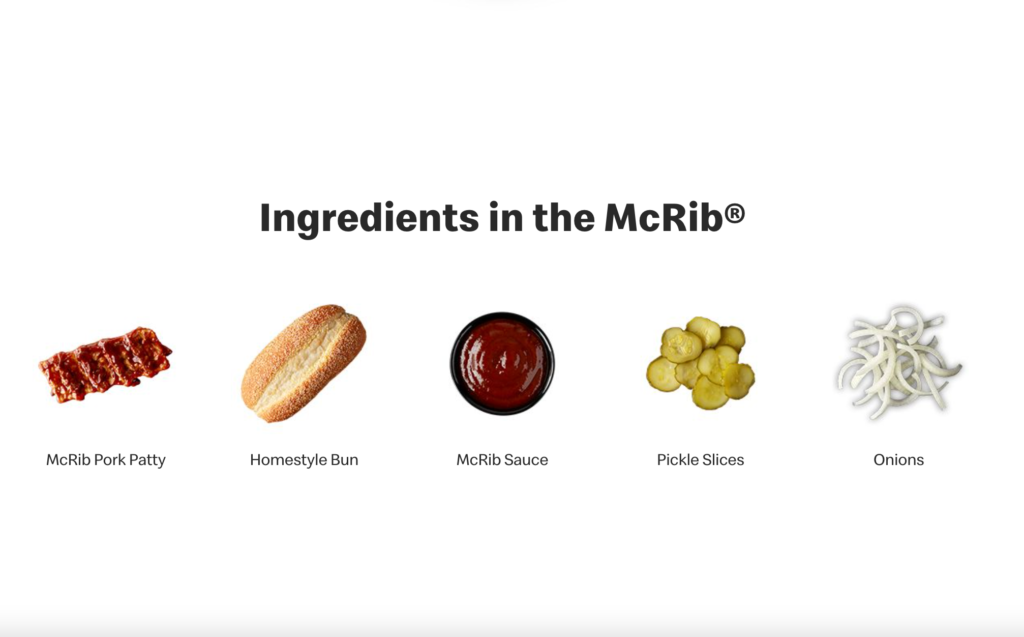
- The McRib is made from a boneless pork patty.
- That patty is formed into a rib shape using molds.
- It’s topped with barbecue sauce, pickles, and slivered onions, served on a homestyle bun.
So, yes — it’s made from pork, but not rib meat. It’s typically a mix of pork shoulder and other parts restructured into a patty using a process similar to how chicken nuggets are made.
That’s not exactly a secret. McDonald’s has described the McRib this way since at least the early 2000s.
So, what’s the problem?
The Gap Between Expectation and Reality
According to a consumer survey conducted as part of the lawsuit:
- 72% of respondents believed the McRib contained pork rib meat.
- 67% said that belief influenced their decision to purchase it.
That’s a big deal in court. Why? Because U.S. consumer protection laws care about “reasonable consumer expectations.” If most buyers reasonably assumed they were getting ribs, and that influenced purchases, a judge may find the marketing misleading — even if the ingredients are technically accurate online.
Think of it this way: if a product is called “Orange Juice” but contains 0% oranges, most people would feel duped. That’s the parallel here.
The Role of “Restructured Meat”
The McRib uses restructured meat, a technique developed in the 1970s to create affordable meat products. It involves:
- Grinding pork into small pieces
- Mixing it with salt and additives to bind it
- Molding it into a specific shape (like ribs)
It’s safe. It’s legal. And it’s common in fast food.
But again, the lawsuit isn’t about health. It’s about whether McDonald’s made that process clear enough to customers, especially given the name “McRib” and the shape of the product.
A History of Hype: The McRib’s Cultural Impact
The McRib first hit menus in 1981, created after McDonald’s ran into chicken shortages. Initially, it wasn’t a big hit — but when it was pulled, demand surged. Since then, it’s made countless comebacks as a limited-time item, generating cult-like enthusiasm.
There are McRib locator websites, dedicated fan groups, and even TV shows (like “The Simpsons”) that have referenced its rare returns.
In other words, it’s not just a sandwich — it’s an event. That kind of fanfare makes the lawsuit even more explosive.
What’s at Stake Legally?
Here’s how the legal process works in a case like this:
1. Class Certification
If the judge agrees the plaintiffs can represent a larger group, this becomes a class-action lawsuit, possibly involving millions of McRib buyers.
2. Motion to Dismiss
McDonald’s will likely ask the judge to throw out the case early.
3. Discovery
If it moves forward, both sides will exchange internal documents. Think marketing memos, product naming discussions, and consumer testing data.
4. Trial or Settlement
Many class actions end in settlement. But McDonald’s could take this to trial if it wants to defend the McRib’s legacy.
The plaintiffs are asking for:
- Damages (money paid back)
- Marketing changes
- Injunctions to prevent similar naming practices
Brand Implications: Lessons for Marketers
This case is a wake-up call for brand managers and advertisers:
- Names matter: “McRib” implies something specific. If it’s not delivered, that’s legal risk.
- Shape matters: Visual cues (like the rib shape) can reinforce assumptions.
- Transparency matters: Burying ingredient info online may not be enough.
If this case succeeds, companies might have to rethink how they name and shape food, even if they’ve been doing it for decades.
It also sets a precedent for future product claims, not just in food but in beauty, wellness, and health products.
McRib Lawsuit Update: What Happens If McDonald’s Loses?
If the court rules in favor of the plaintiffs, McDonald’s could:
- Pay millions in damages to affected customers.
- Be forced to rename the McRib or change its marketing.
- Update packaging and menus with clearer disclosures.
- Set a legal precedent that impacts other companies.
This isn’t a one-off case. It’s potentially a new chapter in how American companies handle product branding.
23andMe Data Breach Class Action Settlement – Apply to Claim $100-$10,000, Check Eligibility
Visa & Mastercard Hit with Billion-Dollar Settlement – Are You Owed $2,000 or More?