
574 PR Invitations in First 2026 Express Entry Draw: that’s not just a headline making waves in the immigration world. For thousands of skilled workers, international students, and hopeful newcomers, this draw marked a powerful kickoff to Canada’s immigration priorities for the year. On January 5, 2026, Immigration, Refugees and Citizenship Canada (IRCC) officially launched the year’s Express Entry selection rounds by inviting 574 Provincial Nominee Program (PNP) candidates to apply for permanent residency. If you’re eyeing the Great White North as your future home, this guide breaks down everything you need to know in a clear, expert, and conversational style. Whether you’re just starting or deep into the process, we’ll help you understand what this draw means and how to boost your own chances in the 2026 immigration landscape.
Table of Contents
574 PR Invitations in First 2026 Express Entry Draw
The first Express Entry draw of 2026, which issued 574 PR invitations through the Provincial Nominee Program, sends a clear message: Canada is actively seeking skilled workers — especially those aligned with provincial and sectoral needs. If your CRS score is modest, the best step you can take is to secure a provincial nomination. It’s not just about scoring points; it’s about understanding how the system works and making it work for you. With planning, strategy, and persistence, Canada can become more than a dream — it can become your new home.
| Topic | Details |
|---|---|
| Draw Date | January 5, 2026 |
| Program Targeted | Provincial Nominee Program (PNP) |
| Invitations Issued | 574 |
| Minimum CRS Score | 711 |
| Tie-breaker Rule Applied | Profiles created before Oct 6, 2025, at 01:54 UTC |
| 2026 PR Target | Approx. 380,000 through various pathways |
| Official Source | IRCC Express Entry Draws |
What Exactly Happened — And Why It’s Important
Canada’s Express Entry system is a points-based immigration platform that selects skilled workers for permanent residency. It evaluates applicants using the Comprehensive Ranking System (CRS), which assigns scores based on age, education, work experience, language proficiency, and other factors.
In this first Express Entry draw of 2026, Canada invited only candidates who had already received a provincial nomination through one of the Provincial Nominee Programs (PNPs). A PNP nomination adds 600 bonus points to your CRS score — meaning candidates in this draw already had significant backing from their chosen province or territory.
This draw was not a general one — it was program-specific, targeting only PNP nominees. The minimum CRS score was 711, which essentially means candidates had a base CRS score of around 111 before the 600-point boost from their nomination.
This type of draw is becoming more common as IRCC works closely with provinces to meet regional labor shortages and support Canada’s long-term population growth goals.
Why the CRS Cutoff Was So High?
It might surprise newcomers to see such a high CRS cutoff, especially when some draws in 2025 had cutoffs in the low 500s or even 400s in category-based selections. But there’s a simple reason: this was a PNP-only draw, meaning every candidate already had a 600-point boost. The actual cutoff before the nomination was likely closer to 111 — not very high, but without that nomination, no one would have qualified.
PNPs are the best way to get ahead in Express Entry if your core CRS score isn’t competitive enough. With the increasing popularity of PNPs, securing a nomination can mean the difference between months of waiting and an invitation to apply within weeks.
A Quick Primer: What is the Provincial Nominee Program (PNP)?
Each Canadian province and territory (except Quebec and Nunavut) operates its own PNP to attract newcomers who meet local labor market needs. These programs often prioritize:
- Tech and IT professionals
- Healthcare workers
- Tradespeople (e.g., electricians, plumbers)
- Truck drivers and transport workers
- Skilled workers in manufacturing, agriculture, and construction
- Francophones outside Quebec
Some PNP streams are aligned with Express Entry (called “enhanced PNPs”), meaning they can nominate candidates who already have a profile in the pool. Others are “base” PNPs, which work independently and offer PR through a non-Express Entry route.

574 PR Invitations in First 2026 Express Entry Draw Step-by-Step Breakdown
Let’s break this down into easy steps so you know exactly how to navigate the system:
Step 1: Create Your Express Entry Profile
You submit an online profile through IRCC’s system. You’ll need:
- Language test results (IELTS, CELPIP, or TEF)
- Educational Credential Assessment (ECA)
- Details about work experience, education, and family
- Proof of funds (if required)
Once submitted, you’ll be placed in the Express Entry pool and given a CRS score.
Step 2: Improve Your CRS Score (If Needed)
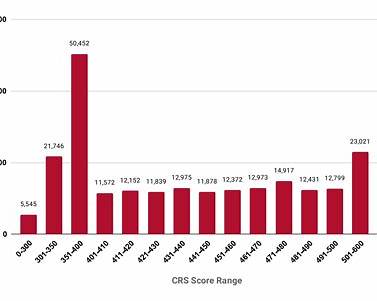
If your CRS is below the competitive range (generally under 480), consider:
- Retaking your language test for a higher score
- Getting a provincial nomination
- Gaining more Canadian work experience
- Completing a higher education credential
- Getting a valid job offer supported by a Labour Market Impact Assessment (LMIA)
Even small improvements — like increasing your IELTS speaking score by one band — can boost your points significantly.
Step 3: Apply to a PNP (Optional but Highly Recommended)
Provinces like Ontario, British Columbia, Alberta, and Saskatchewan regularly search the Express Entry pool for candidates who match their labor needs. You can also apply directly to PNPs based on their criteria.
Some PNPs, such as Ontario’s Human Capital Priorities Stream or BC’s Tech Pilot, invite candidates regularly. Others require you to submit an Expression of Interest (EOI).
Once nominated, you’ll receive a Notification of Interest (NOI) and can update your Express Entry profile to claim the 600 points.
Step 4: Wait for the Next Draw
IRCC holds Express Entry draws regularly — sometimes weekly, sometimes bi-weekly. Your updated CRS will determine if you get selected in a future draw.
There are four types of draws:
- General draws
- Program-specific (FSW, CEC, FST, or PNP)
- Category-based draws (e.g., STEM, trades, French language)
- Tie-breaker-based (when profiles have same CRS)
Step 5: Receive ITA and Apply for PR
If you receive an Invitation to Apply (ITA), you’ll have 60 days to submit your full PR application. Required documents include:
- Police clearance certificates
- Medical exams
- Employment references
- Proof of funds (unless exempt)
- Educational certificates
Processing time is typically 6 months, though some PNPs may be faster.
Additional Strategies to Increase Your Chances for 574 PR Invitations in First 2026 Express Entry Draw
- Build a Long-Term Immigration Plan
Don’t treat Express Entry as a one-shot opportunity. Track your CRS progress and prepare to adjust — whether that’s by getting Canadian work experience, studying in Canada, or improving your French. - Watch Provincial Draw Calendars
Some provinces publish draw dates and targeted occupations. Use those to time your applications strategically. - Follow Trends in Category-Based Draws
In 2025, IRCC introduced category-based draws for sectors like STEM, healthcare, transport, trades, and French-speaking candidates. These continue into 2026 and can offer lower cutoffs. - Stay Draw-Ready Year Round
Keep all your documentation updated — especially your language test (which expires after two years), police checks, and ECA. - Use the CRS Calculator
You can estimate your CRS score using the official IRCC tool. Use it to model different scenarios (with a nomination, without, with a spouse, etc.).
Future Outlook for 2026 and Beyond
Canada’s 2026–2028 Immigration Levels Plan continues to prioritize economic-class immigration, with Express Entry expected to play a central role. IRCC is also expected to expand category-based draws and streamline PR pathways for international students, caregivers, and temporary foreign workers.
The government remains focused on attracting skilled talent in priority sectors such as:
- Digital and information technology
- Renewable energy
- Infrastructure
- Health and long-term care
- Francophone communities outside Quebec
If your background aligns with these fields, your chances of success through Express Entry and PNPs are even stronger.