

Canada Immigration Over 55: If you’re researching Canada immigration over 55, you’ve probably heard the same discouraging message: “You’re too old to move to Canada.” But guess what? That’s not the whole story. In 2026, older adults absolutely have valid, proven ways to immigrate, reunite with family, or even launch a second career. Canada doesn’t have a traditional retirement visa like Mexico or Panama — but it does have several active immigration pathways that people aged 55 and up can use to become permanent residents. The key? Choosing smart, strategic options that focus on family ties, work experience, or community value, not just age.
Table of Contents
Canada Immigration Over 55
Immigrating to Canada after age 55 is absolutely possible — and in 2026, more pathways than ever are open. Whether you’re joining your family, investing in a business, or working a skilled job, your age won’t stop you if you approach the process strategically. Canada values family, experience, and contribution — and that means there’s a place for you if you bring those things to the table.
| Immigration Pathway | Age Barrier? | Permanent Residency? | Ideal For |
|---|---|---|---|
| Parents & Grandparents Sponsorship | No | Yes | Those with children/grandchildren in Canada |
| Super Visa | No | No (visitor visa only) | Long family stays up to 5 years |
| Provincial Nominee Programs (PNPs) | Varies | Yes | Skilled workers or investors |
| Temporary Work → PR | Low | Yes | Job seekers over 55 |
| Self-Employed/Business Routes | Minimal | Yes | Entrepreneurs, cultural workers |
Canada Immigration Over 55: What’s the Real Story?
Many people assume that once you hit age 55, immigration doors automatically close — especially to a country like Canada with a point-based system. While it’s true that Express Entry penalizes older applicants by reducing points after age 40, it’s not the only pathway.
Canada’s family reunification, provincial nominations, and business immigration streams offer real opportunities that don’t revolve around age — and some are even age-neutral. It’s about picking the right fit for your situation, not forcing yourself through a points-based system that favors 25-year-olds.
Let’s dig into these pathways and explore practical tips that make them work.
Parents & Grandparents Sponsorship (PGP): Best for Family Reunification
This is one of the strongest options for those over 55. If your child or grandchild is a Canadian citizen or permanent resident, they can sponsor you through the PGP program. There’s no age limit, and the focus is entirely on family ties and financial stability.
How It Works:
- The sponsor submits an “Interest to Sponsor” form when the government opens the intake window (usually once per year).
- If selected, they submit a full application proving financial eligibility (Minimum Necessary Income – MNI).
- Once approved, the parent/grandparent receives permanent residency.
In 2025, over 17,000 invitations were issued through this program — and the 2026 cycle is expected to be even larger.
Financial Requirement: Sponsors must meet a 3-year income average, adjusted for family size. For a family of 3 (sponsor, spouse, parent), the 2024 minimum was CAD $50,800.
Pros:
- No language or education requirement
- Direct PR with full access to healthcare and services
- Can lead to citizenship after 3–5 years
Cons:
- Competitive: Entry into the lottery isn’t guaranteed
- Takes time: Processing can take 1–2 years
Super Visa: Long Stay, Low Stress
Think of the Super Visa as the next best thing if you’re not selected for PGP. It allows parents and grandparents to visit Canada for up to 5 years per entry and is valid for 10 years. This means you can stay with family longer and reapply without redoing the visa every six months.
Requirements:
- Must be invited by a child/grandchild in Canada
- Must have private medical insurance from a Canadian provider (starting around CAD $1,000/year)
- Must meet a simple medical examination and pass background checks
While it doesn’t lead to PR directly, the Super Visa lets you live in Canada while a future sponsorship application is prepared.
Pro Tip: It’s ideal for folks who want to spend summers in Canada and winters abroad — very popular with snowbirds.
Provincial Nominee Programs (PNPs): Tailored by Province
The Provincial Nominee Program (PNP) is Canada’s most flexible and regional immigration route. Each province has different needs — and many of them welcome older, experienced workers or small business owners.
Popular PNP Streams for 55+:
- Ontario Employer Job Offer Stream (no points system — employer-driven)
- Manitoba Business Investor Stream
- British Columbia Entrepreneur Immigration
PNPs typically focus on:
- Job offers from local employers
- In-demand occupations (caregivers, tradespeople, chefs, healthcare)
- Business investment and job creation
Pros:
- Some PNPs don’t penalize age
- Many don’t require a high IELTS score
- Pathway to PR after provincial nomination
Cons:
- You must commit to living in the province
- Some streams require settlement funds or job offers
Temporary Work Permit → Permanent Residency
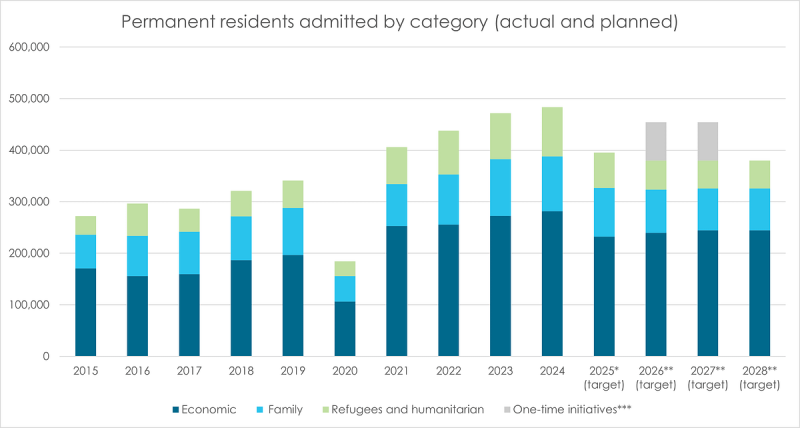
Canada’s 2026–2028 immigration plan includes a focus on converting temporary foreign workers to PR status. The government expects to transition over 33,000 workers annually into permanent residents.
Strategy:
- Apply for a work permit with an employer in Canada
- Gain 1–2 years of Canadian work experience
- Apply for PR through the Canadian Experience Class or a PNP
Good for:
- Caregivers, construction professionals, farm workers, truck drivers, etc.
- People with a job offer but few points under Express Entry
Age Advantage: The work permit itself has no age restriction, and your real-world experience is what counts most.
Canada Immigration Over 55: Business & Self-Employed Immigration Routes
Older adults often have decades of experience in business, culture, or farming. Canada offers specific PR programs for entrepreneurs and self-employed professionals.
Popular Routes:
- Self-Employed Persons Program: For those in arts, culture, sports, or farming
- Startup Visa Program: For entrepreneurs backed by Canadian venture funds
- Provincial Business Immigration Streams: Investment thresholds range from CAD $100,000–600,000
These programs require:
- Business experience (often 2–3 years)
- Intent to live in a province or invest locally
- Proof of settlement funds
Important Note: These routes are competitive and documentation-heavy, but don’t penalize age.
Real-Life Examples of Canada Immigration Over 55
Example 1: Maria, 61, from Texas
Maria’s son is a PR holder in Vancouver. He submitted an “Interest to Sponsor” form and was selected in the 2025 PGP lottery. In 2026, Maria’s PR application is under review. In the meantime, she applied for a Super Visa to stay with him.
Example 2: David, 58, from Illinois
A restaurant chain in Alberta offered David a work permit as a head chef. After two years of Canadian work experience, David applied for PR through the Alberta PNP and was nominated successfully — now he’s waiting for final approval.
Settlement Advice for Older Immigrants
Moving after 55 comes with new challenges. Here are tips to settle successfully in Canada:
- Healthcare: Once you’re a PR, you qualify for free public healthcare — but there’s often a 3-month waiting period. Consider private insurance for that gap.
- Weather: Canadian winters are serious. Choose cities with milder climates like Victoria, BC, or Halifax, NS.
- Senior Services: Every province has free settlement agencies that help with:
- Housing
- Language training (even seniors can get free ESL)
- Accessing government benefits
Canada Quietly Raises Medical Inadmissibility Cost Threshold for 2026
$530 CPP Increase Confirmed for January 2026: Check Eligibility & Payment Date