
DWP Cold Weather Payments: DWP Cold Weather Payments are one of the UK government’s most important and automatic tools to support vulnerable households during harsh winter months. Designed to help with increased heating costs during freezing spells, the scheme quietly kicks in when it’s needed most. With millions struggling to heat their homes amid high energy prices, these payments are more than just a government checkbox—they’re a critical safety net. This winter (2025–26), hundreds of postcode areas have already qualified for at least one Cold Weather Payment, and more areas are likely to be added as freezing weather continues. Whether you’re a pensioner, a single parent, or just trying to understand how the system works for your loved ones, this complete guide will walk you through everything you need to know in plain English, while still offering insights valuable to professionals and benefit advisers.
Table of Contents
DWP Cold Weather Payments
DWP Cold Weather Payments are more than just a box on a government form — they’re a necessary financial lifeline for millions of people when the cold sets in. With winter 2025–26 already triggering payments across hundreds of postcode areas, now is the time to make sure you’re informed, eligible, and receiving the support you’re entitled to. These automatic £25 payments won’t solve all heating challenges, but they do provide timely relief when it matters most. Check your eligibility, use the official tools, and stay safe and warm this winter.
| Feature | Detail |
|---|---|
| Scheme Name | DWP Cold Weather Payments |
| Administered by | Department for Work and Pensions (DWP) |
| Trigger Condition | 7 consecutive days of average temp ≤ 0°C |
| Payment per Trigger | £25 automatically paid |
| Period | Nov 1, 2025 – Mar 31, 2026 |
| Where It Applies | England, Wales & Northern Ireland |
| Eligibility | Means‑tested benefits (UC, Pension Credit, JSA, ESA, SMI) |
| Official Checker | https://www.gov.uk/cold‑weather‑payment |
What Are DWP Cold Weather Payments?
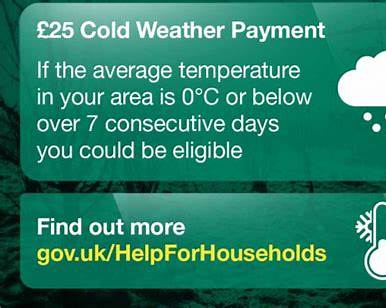
Cold Weather Payments are automatic £25 payments issued by the Department for Work and Pensions (DWP) whenever the average daily temperature in your area drops to 0°C or below for 7 consecutive days. The system runs each year between November 1 and March 31. If there’s more than one qualifying cold spell, you’ll get £25 for each one. You don’t need to apply — payments are triggered and sent automatically if you meet the eligibility criteria.
According to GOV.UK, the scheme exists to help low-income individuals and families cover the extra cost of heating their homes during dangerously cold periods. It’s especially important for people who are more likely to suffer from the effects of cold, such as older adults, young children, and those with long-term illnesses.
Cold Weather Payment Triggers This Winter (2025–26)
This season has already seen a few significant cold spells, especially in the final days of December and early January. These have led to payment triggers across hundreds of UK postcodes.
Confirmed trigger periods:
- December 30, 2025
- January 1–3, 2026
- January 6–8, 2026
According to The Sun, over 1 million households have been eligible for Cold Weather Payments this winter so far.
Some postcodes have had multiple cold spells, which means multiple payments of £25 have been issued — totaling £50 or more for some families. The payments are tax-free and don’t affect your other benefits.
Where Have DWP Cold Weather Payments Been Triggered?
The payments are postcode-dependent and rely on Met Office data. As of January 2026, more than 800 postcode areas have been activated.
Some of the areas that have seen Cold Weather Payment triggers include:
- Cumbria: CA9, CA10, CA11, CA12, CA16, CA17
- Northumberland: NE19, NE47–NE49
- Dumfries and Galloway (Scotland): DG14
- Lake District areas: LA8–LA10, LA21–LA23
- Scottish Borders: TD9
Who Is Eligible for DWP Cold Weather Payments?
Eligibility is based on both benefit entitlement and personal circumstances. You may be eligible if you receive one of the following:
- Pension Credit
- Income Support
- Income-based Jobseeker’s Allowance (JSA)
- Income-related Employment and Support Allowance (ESA)
- Universal Credit (if you’re not employed or have a child under five or a health condition)
- Support for Mortgage Interest (SMI)
For Universal Credit claimants, you must have a health condition, be caring for a child under 5, or be assessed as having limited capability for work. Your circumstances must match the criteria on the day the cold spell occurs.
How the Payments Work?
The Cold Weather Payment is £25 per cold spell. A cold spell is defined as 7 days in a row where the average temperature is 0°C or lower in your local weather station area.
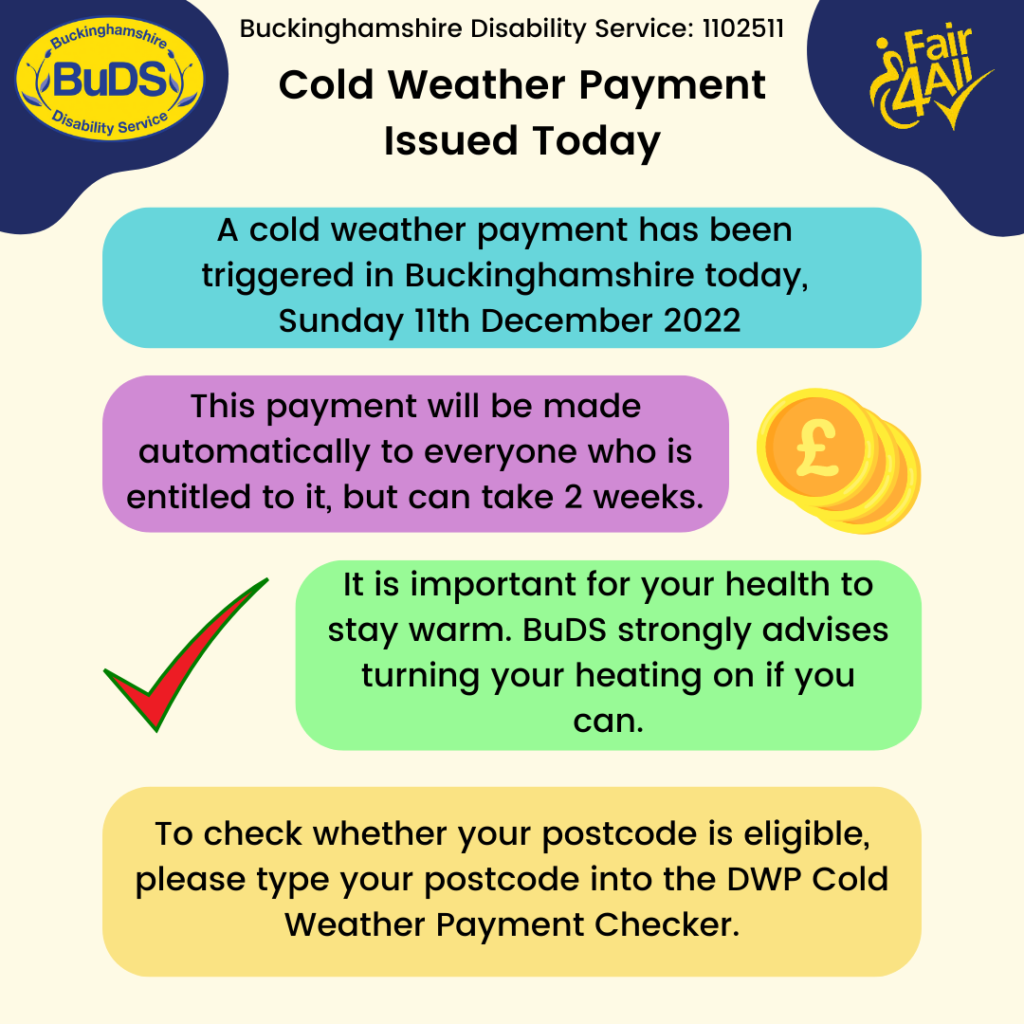
Payments are sent automatically to the same bank account where you receive your benefits. You’ll usually receive the money within 14 working days of the cold spell ending. You don’t have to do anything — no forms, no calls. Just check your bank statement for a reference like “DWP CWP” or “SSA CWP”.
Real-Life Example
Let’s say Jane lives in Carlisle (CA11 postcode). She’s a single parent on Universal Credit with a child under 5. Her local weather station records temperatures at or below 0°C from December 30 to January 5. That means her postcode qualifies, and she receives £25 into her account around mid-January.
A week later, another cold spell happens. If her postcode hits the temperature trigger again, she gets another £25 — no questions asked. In total, she could get £50 or more during the winter if there are multiple qualifying periods.
How to Check If You’re Due a Payment?
Use the official Cold Weather Payment postcode checker provided by GOV.UK:
- Go to https://www.gov.uk/cold-weather-payment
- Enter your postcode
- See if your area has triggered one or more payments
- If you’re eligible, check your bank account for recent deposits
If you expected a payment but haven’t received it, contact the Jobcentre Plus or Pension Service, depending on which benefit you receive.
How Cold Weather Payments Differ From Other Schemes?
Many people confuse Cold Weather Payments with other winter energy support schemes. Here’s how they stack up:
Winter Fuel Payment
- A yearly tax-free payment for those born before 25 September 1958 (for winter 2025–26).
- Amount: £200–£300, depending on age and living situation.
- Not tied to weather or temperature.
- Must usually be of State Pension age.
Warm Home Discount
- A £150 discount on your electricity bill.
- Applied automatically if you’re eligible and your energy supplier is part of the scheme.
- Not a cash payment and doesn’t depend on weather conditions.
Winter Heating Payment (Scotland)
- Replaces Cold Weather Payment in Scotland.
- Flat-rate payment of £55.05 to those in similar eligible groups.
- Doesn’t depend on actual weather or temperature.
Expert Insight: Why Cold Weather Payments Matter
According to energy experts and social policy advisers, Cold Weather Payments can be a small but critical support during months when fuel poverty peaks. According to National Energy Action (NEA), 3.26 million UK households were living in fuel poverty in 2024, and that number was projected to increase.
While £25 may not seem like a lot, it can make a difference when you’re choosing between heating your home or buying groceries. These payments often coincide with the worst weeks of winter, when risks of hypothermia, respiratory infections, and other health issues rise sharply — particularly for the elderly and young children.
Energy-Saving Tips While You Wait for Payment
Here are some quick, practical ways to stay warm while maximizing energy savings:
- Keep doors and windows closed during cold spells to retain heat
- Use draft stoppers or rolled-up towels at door bottoms
- Wear thermal layers, socks, and hats indoors
- Set your thermostat to 18–21°C for safe, efficient heating
- Boil only as much water as needed
- Use thick curtains or thermal blinds
These tips don’t cost much but can make a real difference when you’re waiting for your payment or trying to stretch your heating budget.
New DWP Rule Means Thousands Won’t Get Their State Pension at 66 — Are You Affected?
DWP Confirms Payment Hike for Pensioners — New £114 Boost Coming Soon
DWP’s ‘Absurd’ Universal Credit Test Sparks Outrage; What Claimants Are Being Asked to Do