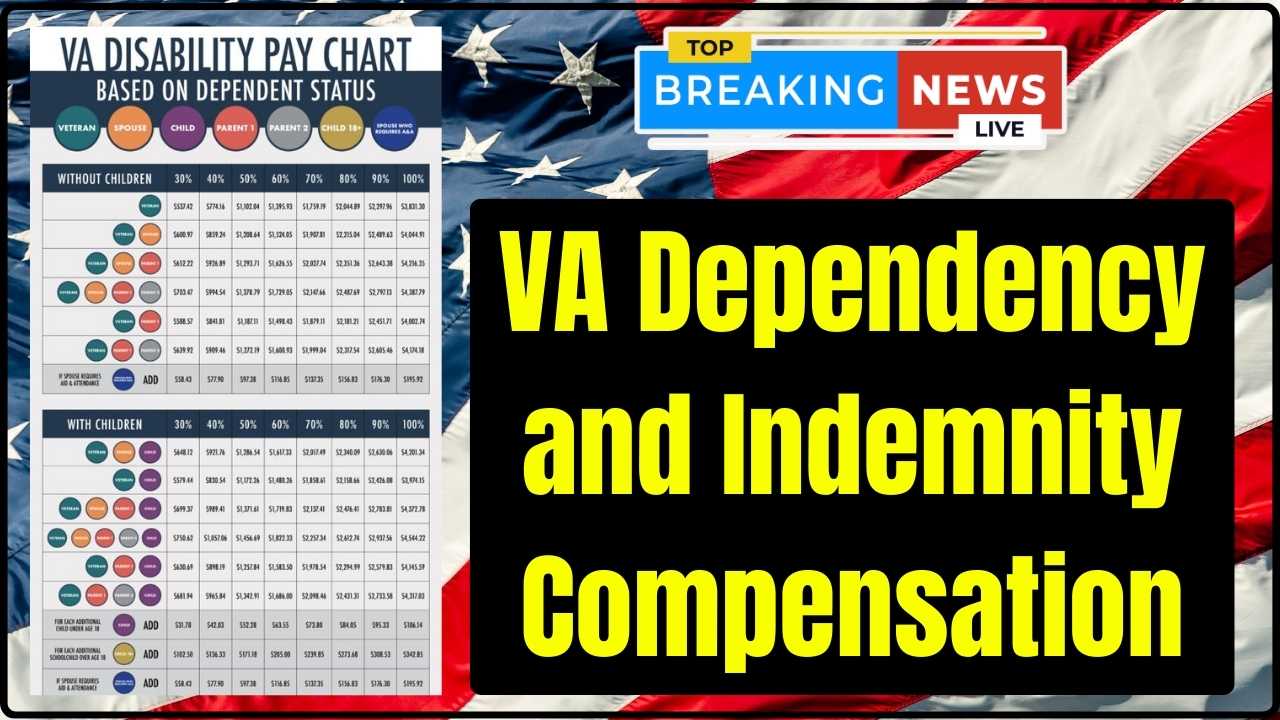

VA Dependency and Indemnity Compensation (DIC) Rates: If you’ve lost a loved one who served in the military, first off — we honor their sacrifice and your strength. This guide on VA Dependency and Indemnity Compensation (DIC) rates for 2026 is built to help you understand what you may be entitled to and how to claim it, step-by-step. The DIC benefit is a monthly, tax-free payment from the U.S. Department of Veterans Affairs (VA). In 2026, with the latest Cost-of-Living Adjustment (COLA) increase of 2.8%, these rates have gone up — giving eligible survivors more support in the face of rising costs. Whether you’re a surviving spouse, child, or parent, you’ll find everything you need to know in this guide. We’ll walk through updated rates, eligibility, how to apply, common mistakes to avoid, and what to do if your claim is denied.
Table of Contents
VA Dependency and Indemnity Compensation (DIC) Rates
If you’ve lost someone who served our country, you carry a burden few can understand — but you shouldn’t carry it alone. These 2026 VA DIC benefits are here to support you — financially, emotionally, and legally. This isn’t a favor. This is a right that’s been earned. Don’t wait. Check your eligibility, apply confidently. You’re not forgotten — and you’re not alone.
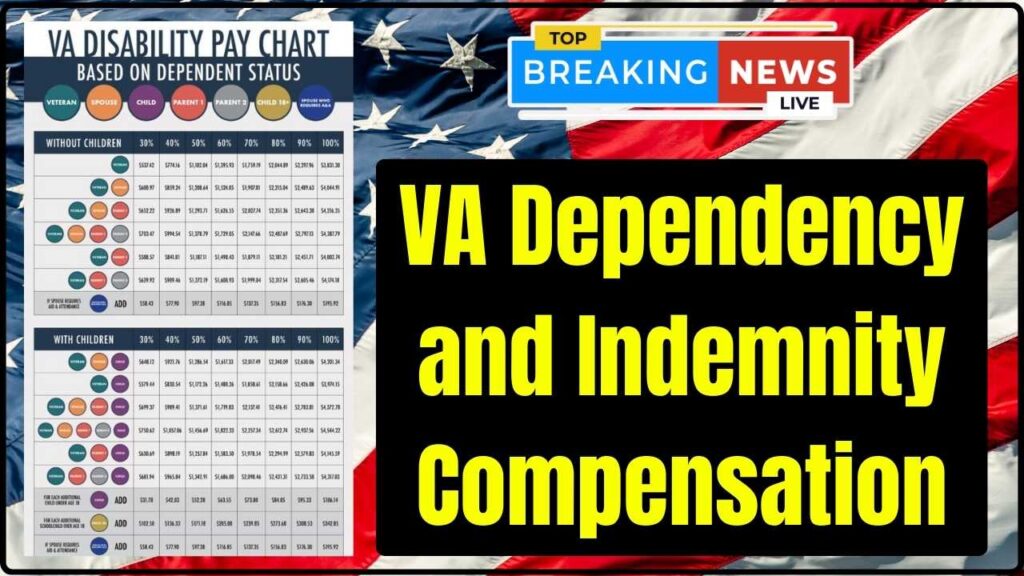
| Category | Details |
|---|---|
| Base Monthly DIC Rate (Spouse) | $1,699.36 |
| Aid & Attendance Add-On | +$421.00 |
| 8-Year Rule Add-On | +$360.85 |
| Per Child Under 18 | +$421.00 |
| Transitional Benefit | +$359.00 (for first 2 years with child) |
| COLA Increase 2026 | 2.8% |
| Effective Date | January 1, 2026 |
| Application Site | va.gov |
What is VA Dependency and Indemnity Compensation (DIC)?
The VA DIC program is a monthly financial benefit paid to surviving family members of service members or Veterans who:
- Died while on active duty, OR
- Passed away due to a service-connected condition, OR
- Were totally disabled for a qualifying period before death (typically 10 years)
The DIC benefit is not a handout — it’s a recognition of lifelong service and a commitment from the government to support surviving loved ones left behind.
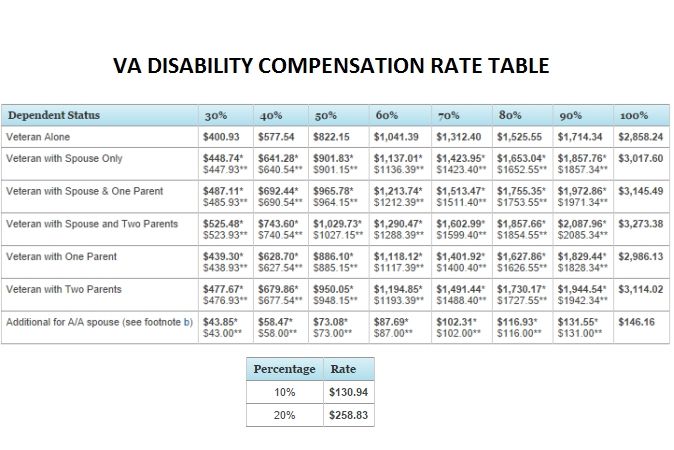
Who is Eligible for VA Dependency and Indemnity Compensation (DIC)?
1. Surviving Spouse
To qualify as a spouse:
- You were married to the Veteran at the time of death
- Or had a child with the Veteran, and lived together until their death (exceptions apply)
Remarriage after age 57 does not disqualify you.
2. Children
- Under age 18
- Under 23 if attending an approved school
- Permanently disabled before age 18 (helpless child status)
3. Surviving Parents
- Biological, adoptive, or foster parents
- Must meet income limits
Detailed Breakdown: 2026 VA Dependency and Indemnity Compensation (DIC) Rates
Let’s get into the actual numbers for this year.
Spouse Base Rate
- $1,699.36/month is the standard base payment in 2026.
But you could be entitled to more based on circumstances.
Additional Monthly Amounts (If Eligible)
| Add-On | Monthly Amount | When It’s Applied |
|---|---|---|
| Aid & Attendance | $421.00 | If you require help with daily living |
| Housebound | $197.22 | If largely confined to home |
| 8-Year Rule | $360.85 | If Veteran was 100% disabled for 8+ years |
| Per Child (Under 18) | $421.00 | Each child under 18 |
| Transitional | $359.00 | Temporary, first 2 years with children under 18 |
Example Calculation:
Let’s say Sarah is a surviving spouse with two kids, and her Veteran spouse was 100% disabled for 10 years.
- Base: $1,699.36
- A&A: $421.00
- 8-Year Rule: $360.85
- 2 Kids: $842.00
- Transitional: $359.00
Total Monthly: $3,682.21
That’s meaningful support — and well deserved.
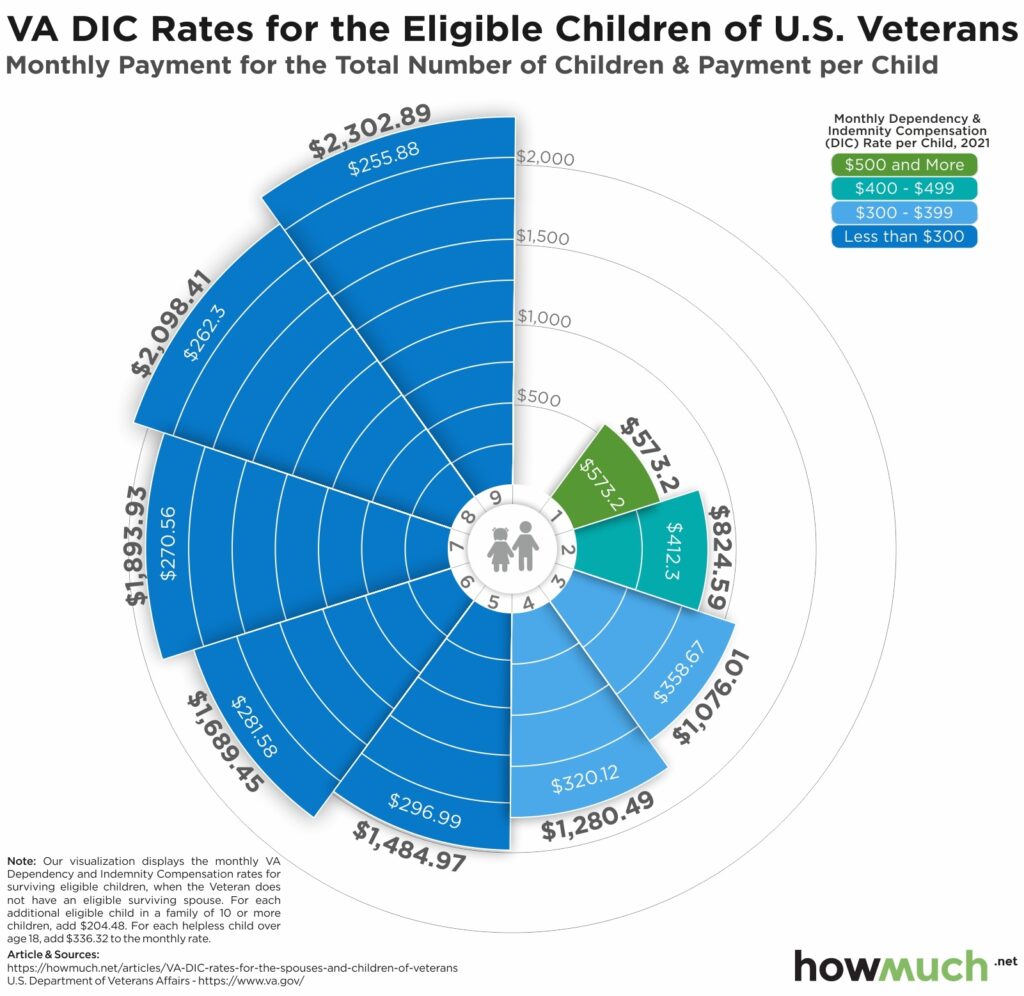
VA Dependency and Indemnity Compensation (DIC) Rates for Children (2026)
If there’s no eligible spouse, dependent children may receive DIC directly.
| Child Type | Monthly Rate |
|---|---|
| One child under 18 | $693.79 |
| Two children under 18 | $498.80 each |
| Three or more | ~$451.37 each |
| Child 18–23 (in school) | $356.66 |
| Helpless child (disabled) | $717.50 |
The VA pays these directly until the child turns 18 or finishes school (age cap: 23).
DIC for Surviving Parents (Income-Based)
Low-income parents may be eligible, based on annual income.
| Status | Max Monthly DIC (approx.) |
|---|---|
| Single parent | Up to $739.00 |
| Married couple | Up to $562.00 each |
Understanding the 2.8% COLA Adjustment
The Cost-of-Living Adjustment (COLA) ensures that benefits keep up with inflation.
- In 2026, the SSA announced a 2.8% increase
- DIC, Social Security, and many VA benefits reflect this increase
How to Apply for VA Dependency and Indemnity Compensation (DIC) Benefits?
The process is more straightforward than most folks expect.
Step-by-Step Guide:
- Gather Documentation
- Veteran’s DD-214 (discharge papers)
- Death certificate
- Marriage or birth certificate
- Medical records (if needed)
- Choose Your Application Method
- Online: Apply here
- By Mail: Use VA Form 21P-534EZ
- For parents: Use VA Form 21P-535
- Track Your Claim
- Create an account at va.gov
- You can upload documents, check status, or contact the VA
- Need Help?
- Reach out to a Veterans Service Organization (VSO) for free help
Common Mistakes That Delay or Deny Claims
Avoid these traps:
- Not submitting complete paperwork
- Assuming you don’t qualify
- Missing deadlines
- Not appealing a denial
Double-check everything and don’t hesitate to ask for support.
What to Do If Your DIC Claim Is Denied?
Denied claims are not the end of the road.
You Have 3 Main Appeal Options:
- Higher-Level Review
- No new evidence, but a new VA reviewer looks at your claim
- Supplemental Claim
- Add new evidence and resubmit
- Board Appeal
- Ask a Veterans Law Judge to review your case
Always consult a VSO or legal rep to find the best option for your situation.
Real Story: Daniel’s Family from North Carolina
Daniel served in Iraq and later died due to service-connected respiratory illness. His wife, Tina, filed for DIC with help from the American Legion. Within 4 months, she received back pay of $9,800 and monthly payments of over $2,400.
Tina used her benefits to cover rent, school supplies for her daughter, and groceries. “It changed our lives,” she said. “It felt like we weren’t forgotten.”
Tips for Filing a Strong Claim
- Use the EZ forms — they’re streamlined
- Be honest and clear in responses
- Get a VSO to review before submission
- Include as much medical history as possible
- Mention any presumptive service connections (e.g., Agent Orange, Gulf War syndrome)
VA COLA Increase 2026 – Check New Rates, Eligibility & Payment Schedule
USAA VA Disability Direct Deposit January 2026 – Expected Payment Dates and What to Know
Federal $2000 Deposits Coming in January 2026: Guide for Eligible Beneficiaries