
1976 Bicentennial Quarter: if that doesn’t make you dig into your old piggy bank, nothing will! The buzz around this coin has reached fever pitch, with viral posts and YouTube videos claiming that one lucky quarter from 1976 could make you a millionaire overnight. But how much of that is real, and how much is just wishful thinking? As a seasoned coin collector and U.S. currency historian, let me guide you through the real story. Whether you’re a curious beginner or a savvy collector, this article will walk you through the ins and outs of the 1976 Bicentennial Quarter, separating facts from fiction and helping you understand what might make yours valuable.
Table of Contents
1976 Bicentennial Quarter
So, could your 1976 Bicentennial Quarter be worth $3 million? Realistically — no. There’s no verified sale anywhere near that number. But can it be worth more than face value? Absolutely — especially if you’ve got a rare error, silver version, or high-grade proof. What matters most is knowledge and proper grading. A coin you’ve walked past a hundred times might be a hidden gem — but only if you know what to look for. Hold onto that curiosity, and keep checking your change. You just might strike silver.
| Topic | Details & Stats |
|---|---|
| Coin Name | 1976 Bicentennial Quarter |
| Design | Dual date “1776–1976” and drummer boy reverse |
| Mint Locations | Philadelphia (no mint mark), Denver (D), San Francisco (S) |
| Mintage | Over 1.6 billion total (most common) |
| Rare Types | Silver-clad proofs, error coins, deep cameo proofs |
| Market Value Range | Common coins: 25¢–$3; Mint State: $10–$50+; Errors: $100–$5,000+ |
| Official Info | U.S. Mint: https://www.usmint.gov |
What Makes the 1976 Bicentennial Quarter Special?
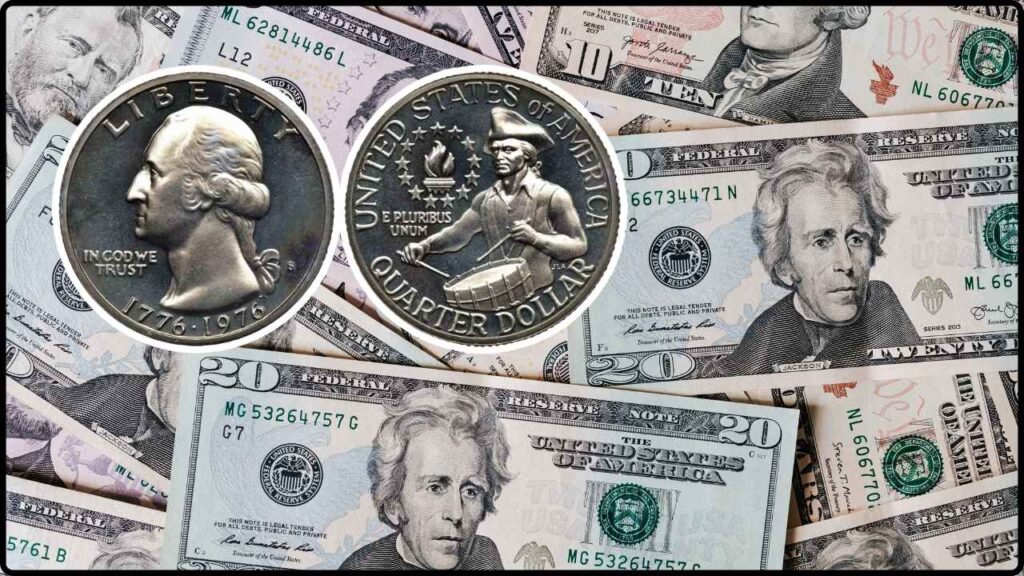
To mark America’s 200th birthday, the U.S. Mint released a special edition quarter in 1976. Instead of the traditional eagle reverse, these quarters feature a Colonial drummer boy — a patriotic design created by Jack L. Ahr. The front still shows George Washington, but the date is “1776–1976” rather than a single year.
The U.S. Mint began striking these coins in 1975, though they all bear the 1976 date. They were minted in three locations:
- Philadelphia (no mint mark)
- Denver (D)
- San Francisco (S) – Proof and silver-clad coins
Over 1.6 billion Bicentennial quarters were made — making it one of the most common commemorative coins in U.S. history.
But within that massive mintage, there are a few unicorns. Let’s find out what they are.
Where Does the $3 Million Claim Come From?
Every few months, social media explodes with headlines like:
“This 1976 Quarter Could Be Worth $3 Million — Check Your Change!”
These claims are typically exaggerated or outright false. No major coin auction house — like Heritage Auctions or Stack’s Bowers — has ever recorded a Bicentennial quarter selling for anything close to $1 million, let alone $3 million.
Still, some rare varieties of the 1976 quarter have fetched thousands of dollars, especially when they feature errors or are in pristine condition.
Types of 1976 Bicentennial Quarters
Here’s a breakdown of the types of Bicentennial quarters and what they might be worth:
1. Regular Circulated Quarters
These are the ones you’ll find in spare change. Most are worn from decades of use.
Value: 25¢ to $1.50
Reality: More sentimental than valuable
2. Uncirculated Mint State Quarters
These quarters were never used in circulation. Often found in U.S. Mint sets or rolls purchased by collectors.
Value: $5 – $50+, depending on condition and mint mark
Tip: Coins graded MS65 and above can command a premium, especially if they show strong luster and strike quality.
3. Silver-Clad Proof Quarters
Made in San Francisco and included in special collector sets, these coins contain 40% silver.
Mintage: ~11 million
Value: $20 – $300+
Watch For: Coins labeled “Deep Cameo” (DCAM) by PCGS or NGC, which have frosted designs and mirror backgrounds.
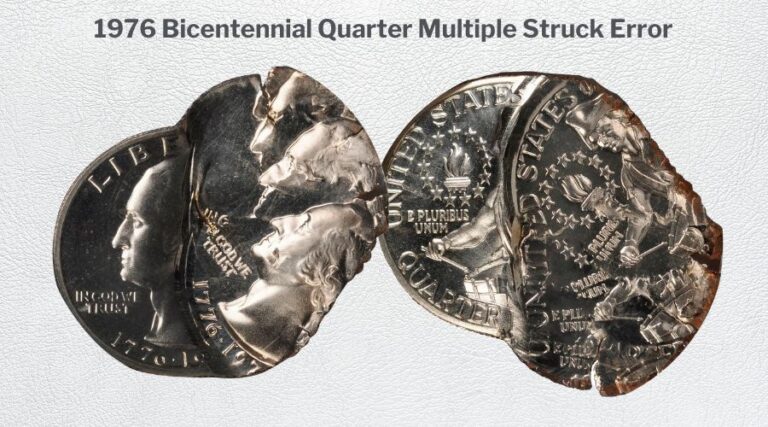
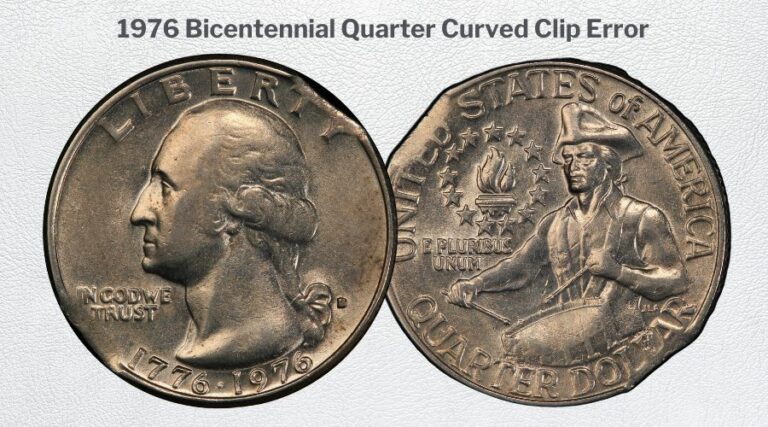
4. Error Coins
This is where value can skyrocket. Rare minting errors — especially if certified — can make a big difference.
Examples of valuable errors:
- Double die obverse (DDO) – where the date or “Liberty” appears doubled
- Off-center strikes
- Wrong planchet errors (e.g., struck on a dime planchet)
- Clipped planchets
Value: $100 to over $5,000
Fact: A 1976-S Bicentennial quarter struck on a silver planchet with a 15% misstrike sold for over $3,000 at auction.
Important: Don’t confuse damage with errors. A coin run over by a car isn’t rare — it’s just wrecked.
How to Tell If Your Quarter Is Valuable: A Step-by-Step Guide
Step 1: Identify the Coin
Does it say “1776–1976”? Does it have the drummer boy on the back? Congratulations — it’s a Bicentennial quarter.
Step 2: Check the Mint Mark
Look to the right of Washington’s ponytail:
- No mint mark = Philadelphia
- D = Denver
- S = San Francisco (often a sign it’s a proof or silver coin)
Step 3: Evaluate the Condition
Is your coin scratched up? Dull? Or still shiny with full design details?
- Circulated (worn): low value
- Uncirculated (mint state): higher value
- Proof/Silver with mirror finish: potentially rare
Coins graded MS65 and higher by PCGS or NGC can bring in real collector cash.
Step 4: Look for Errors
Use a magnifier. Check for:
- Doubling on letters or numbers
- Weak or missing design elements
- Unusual shapes or cuts
Anything strange? You may have an error coin.
Step 5: Get it Graded
If you suspect high value, submit it to:
- PCGS
- NGC
These services authenticate and assign a grade — essential for serious selling.
Real Examples of High-Value Bicentennial Quarters
- 1976-D MS68 Quarter – Sold for $6,463 at Heritage Auctions
- 1976-S Silver Proof PR70 DCAM – Valued at $1,200+
- Off-center strike errors – Often fetch $500 to $1,000
Storing and Protecting Valuable 1976 Bicentennial Quarter
If your coin has potential value, don’t just toss it in a junk drawer.
Tips for safe storage:
- Use acid-free coin holders or Mylar flips
- Keep in a cool, dry place
- Avoid direct handling (wear cotton gloves)
- Never clean a coin — it destroys collector value
Where to Sell Valuable Bicentennial Quarters
Top Options:
- eBay: Good for common coins and silver types
- Heritage Auctions: Trusted for high-value rare coins
- Local coin shops: Easy but may offer less than auction value
- Coin shows: Meet dealers and collectors in person
Tip: Always get multiple offers before selling.
Debunking Common Myths
Myth #1: All 1976 quarters are rare
Truth: Most are extremely common
Myth #2: Silver quarters are from pocket change
Truth: Silver versions were only sold in special collector sets
Myth #3: Old means valuable
Truth: Age is not the most important factor — condition, rarity, and demand matter more
$300,000 State Quarters? These Rare U.S. Coins Are Driving Collectors Wild in 2025
These Jefferson Nickels Are Worth a Fortune — Rare Graded Finds Still Turning Up in Pocket Change
This 1917 Walking Liberty Half Dollar Could Be Worth $175,000; Do You Have One of These Rare Coins?